Conscious Competence Learning Model
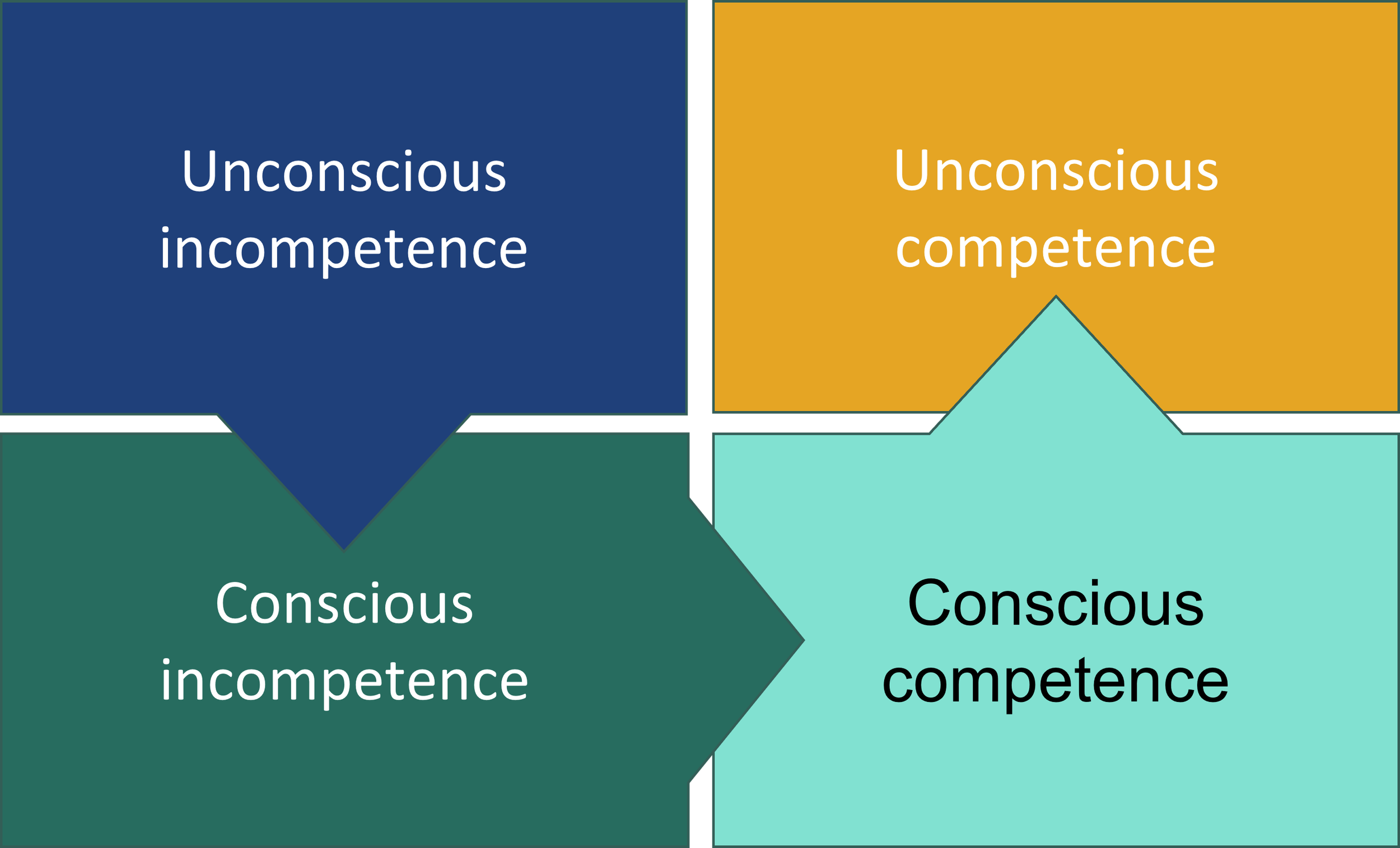
Conscious Competence Learning Model
From “Not Knowing You Can’t” to “Doing It Automatically”
When we start learning a new skill—such as programming, playing music, driving, or learning a language—many people experience a phase where they feel stupid or wonder why everything feels so difficult.
In reality, this feeling is part of a natural learning process described by the Conscious Competence Learning Model.
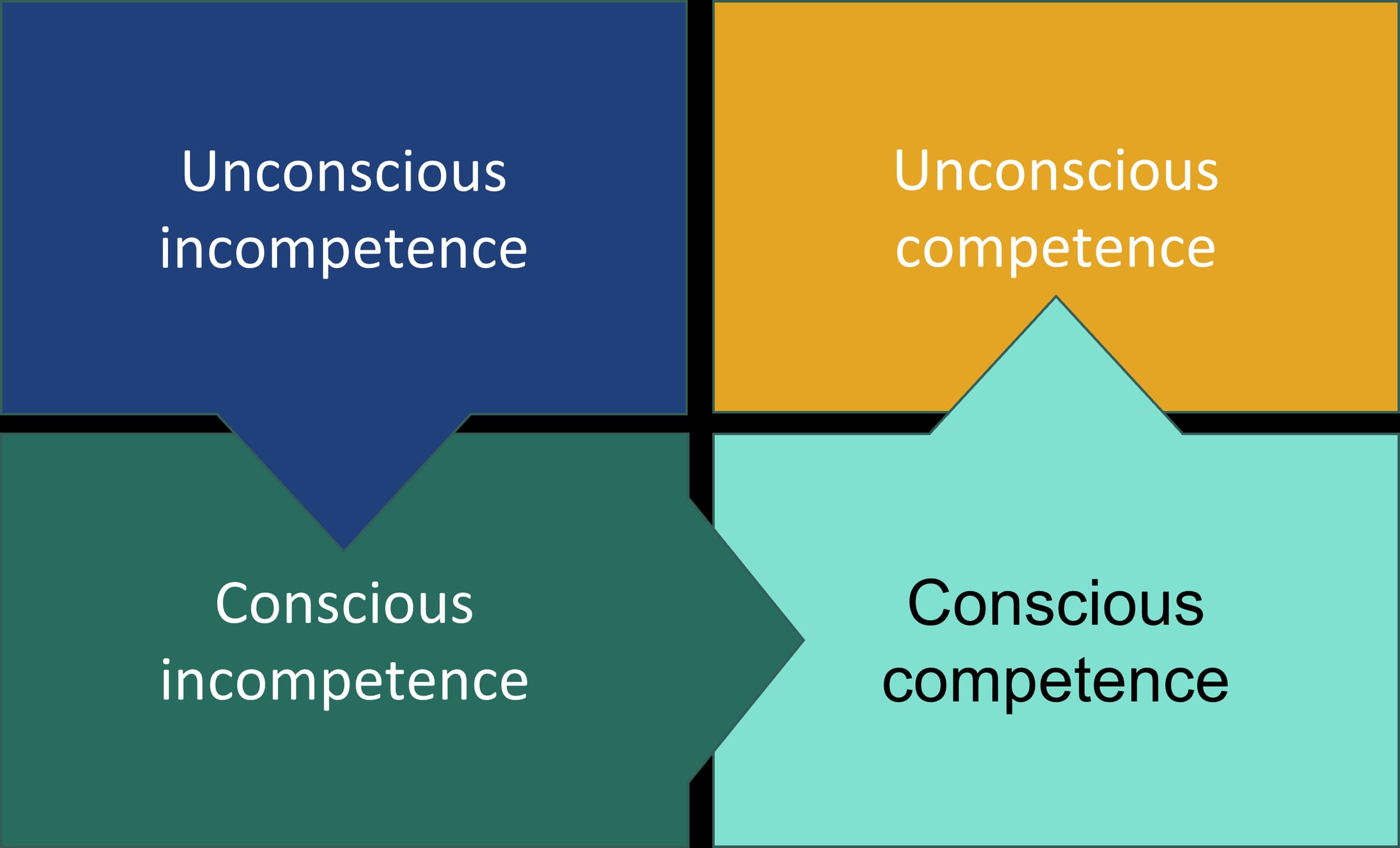
This model explains that humans develop skills through four stages, progressing from not realizing their lack of ability to performing a skill automatically.
1. Unconscious Incompetence
Not knowing that you cannot do something
At the beginning, people usually do not realize how difficult a skill actually is.
Characteristics of this stage:
- You don’t know what you don’t know
- The skill appears easier than it actually is
- Confidence is often higher than actual ability
Example
Someone who has never programmed might think:
“Building an app probably isn’t that hard. You just write some code.”
In reality, they simply haven't seen the complexity yet.
2. Conscious Incompetence
Realizing that you cannot do something
Once you begin learning, you start realizing that the skill is more difficult than expected.
Characteristics of this stage:
- You become aware that you lack the skill
- You start seeing the gap between your ability and the required knowledge
- Frustration or self-doubt often appears
Example
When learning React or programming for real:
- You cannot understand other people’s code
- Errors appear everywhere
- Debugging becomes confusing
Many people at this stage think:
“Everyone else seems so good at this, why am I so bad?”
However, this stage is actually when the brain begins to understand the complexity of the skill.
And it is often the most important stage for growth.
3. Conscious Competence
You can do it, but it requires focus
After enough practice, you start becoming capable of performing the skill.
However, it still requires conscious effort and attention.
Characteristics of this stage:
- You can perform the skill
- But you must think through each step
- It does not feel natural yet
Example
A developer might be able to write React code but still needs to think about:
- Where to store state
- What dependencies to put in
useEffect - How to structure components
Or like learning to drive:
Clutch → Shift gear → Release clutch
Each step requires attention.
4. Unconscious Competence
Doing it automatically
After significant practice, the skill becomes automatic.
Characteristics of this stage:
- You perform the skill without consciously thinking
- It requires less mental effort
- The skill becomes second nature
Example
- Experienced programmers can read and understand code quickly
- Musicians can play songs without looking at notes
- Drivers operate a car without thinking through every action
The skill is stored in the subconscious mind.
Overview of the Learning Process
The progression usually looks like this: