When Comfort Creates a 'Lazy Brain': 4 Ways to Retrain Your Brain to Conquer Hard Tasks
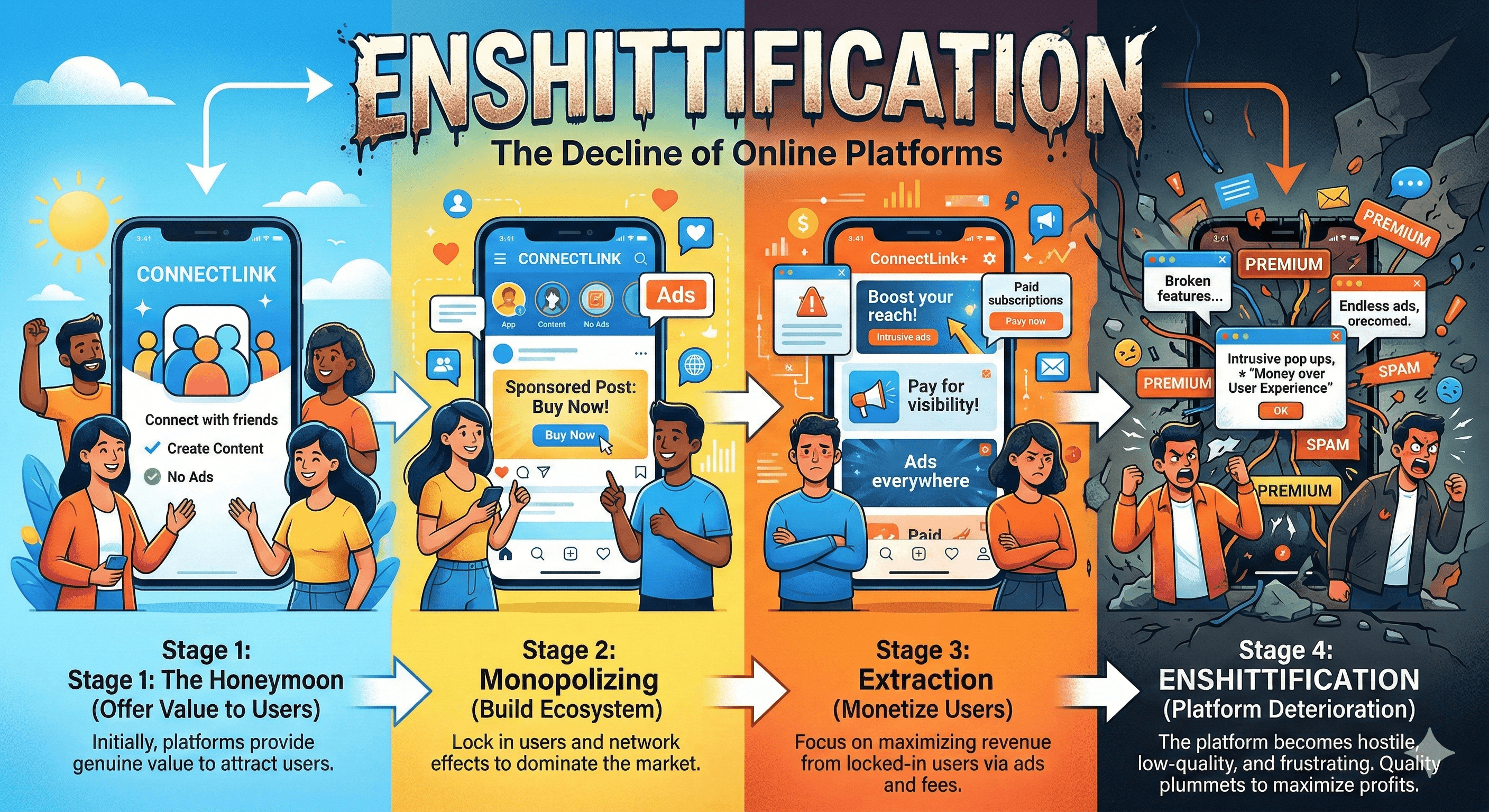
 Our brains were designed to grow through effort, problem-solving, and enduring discomfort. However, in today’s world, simply picking up a smartphone allows everything to be achieved in seconds. Information is instant, entertainment is rapid, and rewards are immediate—all with almost zero effort.
When the brain becomes accustomed to these "quick rewards," activities that require time, focus, or delayed results are automatically interpreted as "heavy" and "unappealing." This isn't necessarily because the task is too difficult, but because our brains have lost the practice of being with difficulty.
Our brains were designed to grow through effort, problem-solving, and enduring discomfort. However, in today’s world, simply picking up a smartphone allows everything to be achieved in seconds. Information is instant, entertainment is rapid, and rewards are immediate—all with almost zero effort.
When the brain becomes accustomed to these "quick rewards," activities that require time, focus, or delayed results are automatically interpreted as "heavy" and "unappealing." This isn't necessarily because the task is too difficult, but because our brains have lost the practice of being with difficulty.
A psychiatrist from **Stanford University** explains that when the brain receives easy pleasure too frequently, it begins to reject activities that require more effort. This condition is simply called "Lazy Brain," which in reality isn't laziness, but a brain trained to avoid discomfort. As a result, deep-thinking tasks become exhausting quickly, starting becomes harder, and we often find ourselves retreating to easier things like phones or short-form entertainment—even when we know the task is important. But the good news is: the brain is an adaptive organ. By changing how we live and handle difficult tasks, we can retrain the brain to be **"tougher, more resilient, and able to enjoy challenges once again."** This leads to **4 simple ways to strengthen your brain:**
---
#### Method 1: Plan in Detail, Don’t Rely on Willpower Willpower is limited, and the brain will always choose comfort first. If you wait until you "feel like doing it," chances are it won't get done. A more effective way is to define exactly what, when, where, and how much you will do. The clearer the plan, the less the brain has to think, leaving no room for procrastination.
#### Method 2: Use the Buddy System; Hard Tasks Become Instantly Easier Doing something difficult alone can be exhausting. But when you have a friend or a "buddy," the brain feels a sense of accountability. Research from **University College London** found that people are more likely to successfully change their behavior when they do it with someone else. In the workplace, simply finding someone to focus on work alongside you can prevent you from giving up too easily.
#### Method 3: Embrace the Struggle First, Relax Later Our brain acts like a balance scale between pleasure and pain. If we constantly choose what is indulgent, the scale will eventually swing back to make us feel worse. However, if we push through a bit of discomfort and tackle the hard task first, the brain rewards us with "Pride"—a type of happiness that lasts much longer and makes us less afraid of difficult work.
#### Method 4: Be Kind to Yourself; Focus on Progress, Not Perfection Setting goals that are too brutal often ends in guilt and quitting halfway. What works better is accepting small progress. If you can’t give 100% today, that’s okay. Just starting or moving a little bit is a win. Accumulating small victories builds brain confidence, making it brave enough to tackle increasingly difficult tasks.
---
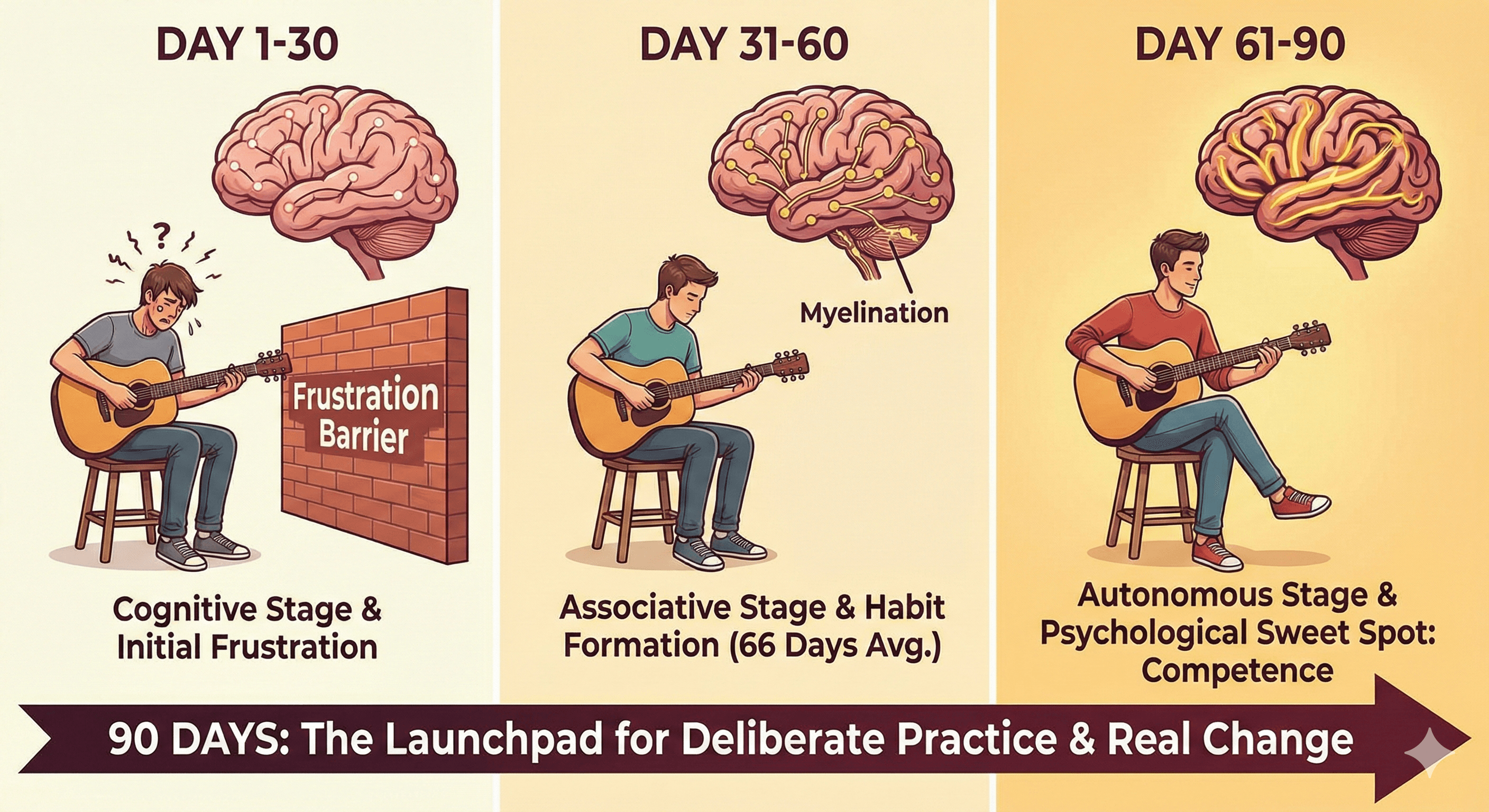
In short, difficult tasks aren't meant to torture us. They are tools to train the brain to be resilient, strong, and capable of growth. Doing hard things isn't about meaningless self-forcing; it is about delaying comfort for a moment in exchange for pride and more sustainable results in the long run.